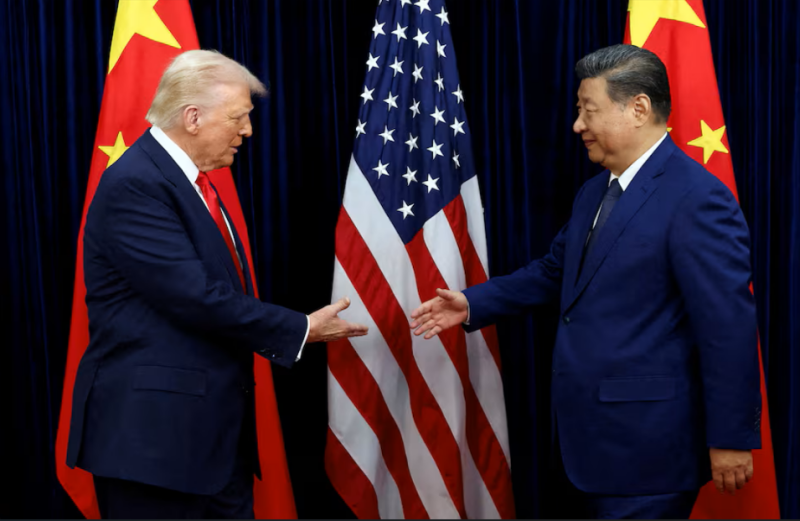
In looking at media systems globally, there are few nations that have different media systems from those in the United States. The People’s Republic of China is a country that serves as a good example of a nation with differences in its media system from the U.S. China is one of the strongest nations on Earth in terms of its economy and politics. It has over 1.4 billion citizens and is growing in its digital economy. Despite having all this power, China still controls its media system with an iron fist. This includes the media of newspapers, TV, movies, radio, and even the Internet. It is used to maintain political stability and to control the thoughts of its citizens. Conversely, in the U.S., there is more freedom of speech and press under the First Amendment.
Freedom House says that China still remains one of the countries with the least freedom of media because of censorship, restriction of journalists, and extensive monitoring of internet traffic by the government. The Authoritarian Theory of the Press presented in Chapter 15 refers to the same problem and claims that governments exercise total control over information communication and restrict any criticism of their policies.
The media system in China corresponds to the Authoritarian Theory of the Press from Chapter 15, which states that governments control the content of information in order to preserve political power and social stability. Media outlets in China are state-owned or controlled by the government. News media are expected to fulfill the objectives of the Communist Party of China, and journalists can be reprimanded for criticizing the government and addressing politically delicate issues.
Internet censorship is one of the most significant instances of control in China. It runs one of the most sophisticated censorship programs globally, known as the “Great Firewall.” There are many websites blocked by the Chinese authorities; for instance, Google, YouTube, Instagram, X, among others, are banned in China. Chinese citizens make use of approved platforms by the government, such as WeChat and Weibo. According to the Chinese government, this kind of strict control is necessary to ensure social stability as well as prevent disinformation or any other misleading information from spreading.
In America, the press and journalists enjoy more freedom to criticize the government and present their opinions. They are free to expose any form of political misconduct, criticize politicians, and present divergent views without being censored by the government. Though the media in the U.S. receives complaints over political prejudice and its affiliation with corporations, the government cannot easily close such outlets just because they criticize the government.
The Chinese print and broadcast media are regulated to a large degree by the government. The leading newspapers and television channels function under the surveillance of the government, and political propaganda is watched carefully. Television channels such as CCTV (China Central Television) frequently broadcast information about the government and country's successes. News reporting in China generally avoids political criticism in any form, particularly concerning protests or censorship.
In addition to this, the film industry in China has also expanded considerably over the past few years and is now among the biggest film industries in the world. But any films that are produced in China have to be cleared by the government before they can be exhibited in public. Films with politically sensitive content and themes that clash with those of the government are frequently censored or banned. On the other hand, the film industry of the USA grants a much wider scope for creativity.
Digitization has had differing impacts on the two nations. In America, the growth in social media and digital platforms increased the number of information sources, while people were provided with additional means for voicing their opinions on the internet. Despite the problem with misinformation being significant, Americans enjoy unlimited access to information from all over the world. Digitization in China brought about an increase in internet usage and communications but also enhanced the capacity of the Chinese government to censor online content.
There is a great disparity between the two nations regarding media ownership. Ownership of media outlets in China is greatly affected by government intervention, limiting the independent voices there. Ownership of media outlets in the US is largely privatized; however, there are a few individuals who suggest that the ownership of various outlets by big companies can limit different points of view. Nonetheless, there are more opportunities for independent reporting in the US than in China.
The media systems in China and the U.S. are very different in terms of how politics and culture view communication. The authoritarian media system in China focuses on government control, political stability, and censorship, whereas the media system in the U.S. is based on free speech and journalistic independence. Each of these media systems has its pros and cons. The Chinese government defends the authoritarian media system, saying that this helps prevent social unrest and spread of misinformation, but some argue that this is an inefficient system due to lack of openness and individual liberty.
Personally, I believe that the American model is better since it allows people to question their superiors in an open manner and also have access to multiple sources of information. While it may be argued that there is media bias and misinformation in America, the ability of people to freely critique the government is an essential part of democracy which results in greater openness for the public. Despite issues such as media bias and misinformation existing in the United States, the freedom of criticizing the government is an essential component of democracy.
Create Your Own Website With Webador